What Does a Medical Certificate Look Like?
A medical certificate is a crucial document that verifies an individual's medical condition and their inability to attend work, school, or other obligations. In Australia, medical certificates are widely used for workplace sick leave, insurance claims, and educational purposes. But what exactly does a medical certificate look like, and what information should it include? This guide provides a detailed breakdown of the key components, legal requirements, and examples of medical certificates in Australia.
Dociva does not backdate issue or assessment dates; they remain the actual dates. However, where clinically appropriate, an Australian-registered medical practitioner may, at their discretion, certify that a period of illness or incapacity commenced before the date of assessment. Retrospective periods are not guaranteed.
Key Components of a Medical Certificate
A valid medical certificate in Australia must include the following key components:
- Patient Details: The certificate must include the patient's full name, date of birth, and address.
- Practitioner Details: The name, qualifications, and registration number of the healthcare professional issuing the certificate.
- Date of Issue: The date the certificate was issued.
- Medical Condition: A brief description of the patient's medical condition or diagnosis (without violating privacy laws).
- Dates of Incapacity: The specific dates the patient is unfit for work or other obligations.
- Practitioner's Signature: A handwritten or digital signature from the healthcare professional.
- Clinic or Practice Details: The name, address, and contact information of the clinic or practice where the certificate was issued.
These components help a receiving organisation assess the certificate, but employers, schools, universities and other organisations may have their own evidence requirements.
One Time Services
Example of a Medical Certificate
Here's an example of what a medical certificate might look like issue after online consultation:
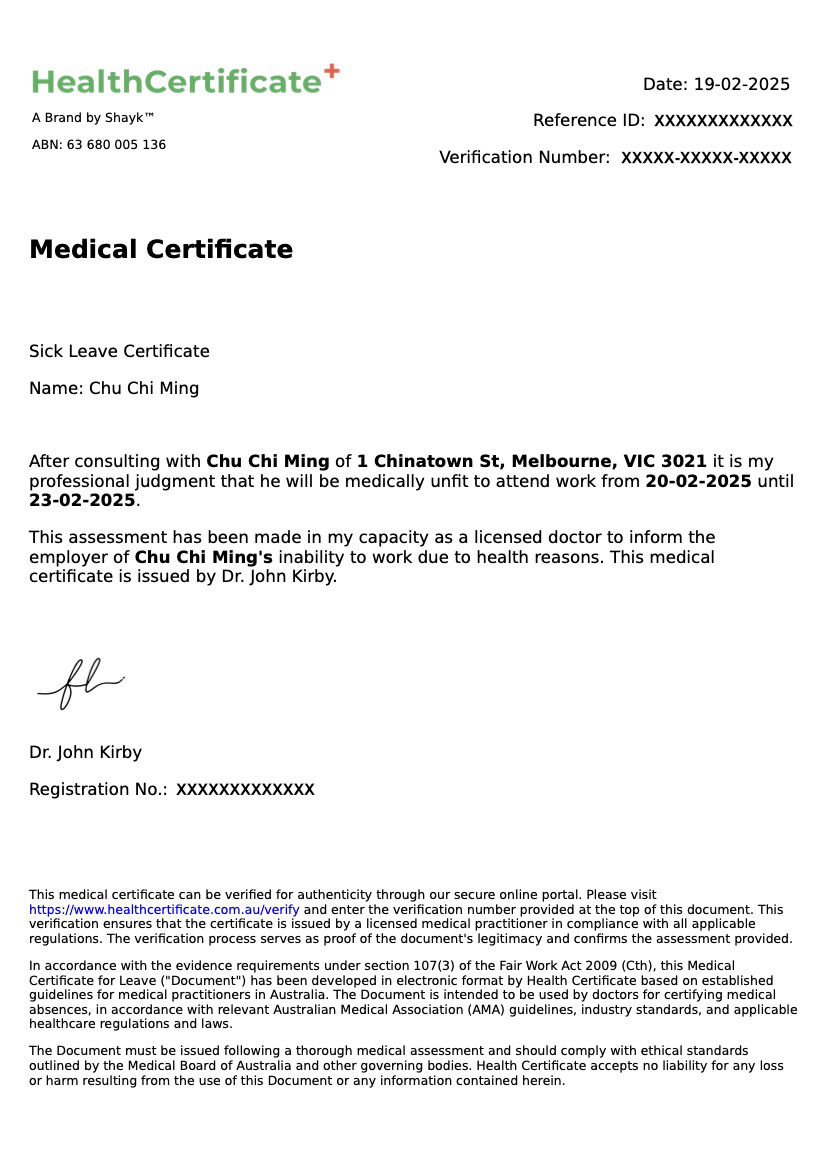
This example includes all the necessary details to make the certificate valid and compliant with Australian regulations.
Types of Medical Certificates
Medical certificates can vary depending on their purpose. Here are some common types:
- Standard Sick Leave Certificate: Covers short-term absences (1-14 days) due to illness or injury.
- Extended Medical Leave Certificate: For chronic or long-term conditions, valid for up to three months.
- Fitness for Work Certificate: Issued to confirm an individual's ability to return to work after an illness or injury.
- Telehealth Certificates: Legally recognised certificates issued via online consultations.
Legal Requirements for Medical Certificates
In Australia, medical certificates must comply with the following legal requirements:
- Issued by a Registered Practitioner: Only qualified healthcare professionals, such as GPs, nurse practitioners, or psychologists, can issue certificates.
- Accurate and Truthful Information: The certificate must accurately reflect the patient's condition and incapacity.
- No Backdating: The issue and assessment dates cannot be backdated. However, a practitioner may certify an earlier period of illness or incapacity where clinically appropriate. A retrospective period is not guaranteed.
- Digital Signatures: Telehealth certificates must include a digital signature to be valid.
Failure to meet these requirements can result in the certificate being deemed invalid.
Why Choose Dociva?
| Feature | Dociva online process | Traditional clinic process |
|---|---|---|
| Application access | Yes: Available anytimeApply online anytime | No: Clinic hours applyDepends on clinic opening hours |
| Practitioner assessment | Yes: Australian-registered practitionerReviewed by a medical practitioner | Yes: Clinic practitionerReviewed by a clinic practitioner |
| Starting price | Yes: From $16.90Affordable pricing | No: VariesFees vary between clinics |
| Travel required | No: Not requiredFor suitable online requests | Yes: May be requiredClinic attendance may be needed |
| Waiting room | No: No physical waiting roomComplete suitable requests online without clinic attendance | Yes: May involve waitingDepends on the clinic |
| Certificate delivery | Yes: Electronic deliveryApproved certificates sent by email | No: VariesDelivery method depends on the clinic |
| Verification | Yes: Online verificationVerification available through Dociva | No: VariesDepends on the clinic's process |
| Outcome timeframe | Yes: Within 1 hourAllow up to 1 hour for an outcome | No: Depends on availabilityAppointment availability varies |
How to Verify a Medical Certificate
Employers and institutions can verify the authenticity of a medical certificate by:
- Online Medical Certificate Verification: Go to verification page, provide email address and reference number to authenticate the certificate.
- Checking Practitioner Registration: Use the AHPRA website to verify the practitioner's registration number.
- Reviewing the Details: Ensure all required components (e.g., patient details, dates of incapacity) are present and accurate.
Telehealth Medical Certificates
With the rise of telehealth services, medical certificates can now be issued online. Here's what a telehealth certificate looks like:
- Digital Format: Certificates are emailed as PDFs or downloadable files.
- Digital Signature: Includes a secure digital signature from the practitioner.
- Clinical assessment: Telehealth certificates should be based on appropriate practitioner review and the receiving organisation's evidence requirements.
Common Mistakes to Avoid
When issuing or using a medical certificate, avoid these common mistakes:
- Missing Information: Ensure all required details (e.g., patient name, dates of incapacity) are included.
- Illegible Handwriting: Use clear and legible handwriting or digital text.
- Expired Certificates: Certificates are typically valid for 12 months from the date of issue.
- Fraudulent Certificates: Using or issuing fake certificates is illegal and can result in severe penalties.
Conclusion
A medical certificate is a vital document that serves as proof of illness or incapacity. In Australia, it must include specific details, such as patient and practitioner information, dates of incapacity, and a valid signature. Whether issued in person or via telehealth, medical certificates must comply with legal requirements to be considered valid. By understanding what a medical certificate looks like and how to verify its authenticity, you can ensure compliance with workplace, educational, and legal standards. Dociva explains the available pathways for online medical certificates in Australia.
Frequently Asked Questions (FAQs)
Yes, medical certificates can be handwritten, but the handwriting must be clear and legible. Digital certificates may also be accepted depending on the receiving organisation's requirements.
Medical certificates are typically valid for 12 months from the date of issue, as per the Corporations Act 2001.
Employers can reject a certificate if it lacks required details or appears fraudulent. However, they must provide a valid reason for rejection.
If you lose your certificate, you can request a duplicate from the issuing practitioner or clinic. Telehealth certificates can often be re-downloaded from the provider's platform.
Yes, telehealth certificates are legally valid in Australia under the Australian Government's telehealth reforms.